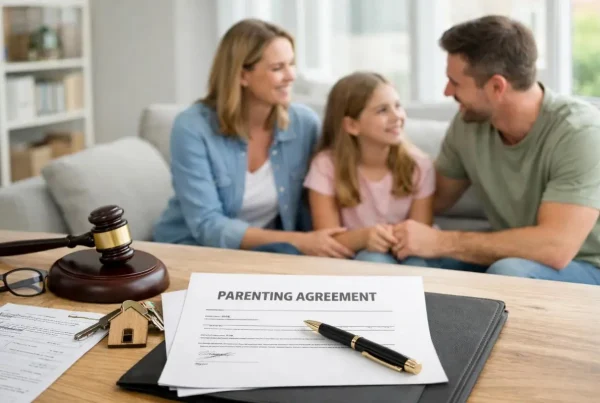

A divorce parenting agreement is not a formal legal term in Australia. What people commonly refer to as a divorce parenting agreement is actually a parenting plan or a court parenting order. These documents outline how separated parents will care for their children, including living arrangements, time spent with each parent, and decision-making responsibilities after separation.
The key is clarity. Without a clear agreement, someone’s guaranteed to mix up which grandparent gets the kids this Christmas. The Federal Circuit and Family Court notes a divorce “does not determine what parenting arrangements should be in place for children.” You must sort that out separately. In short: even if a marriage ends, the parenting responsibilities continue.
Our Brisbane family law experts often advise couples to focus on the kids and hammer out the details. Advice for married couples often includes thinking ahead about co-parenting, because if things do change, knowing exactly what comes next is one of the best ways to protect everyone involved.
What Is a Divorce Parenting Agreement?
A divorce parenting agreement isn’t a new legal buzzword – it’s just shorthand for any arrangement parents make after a split about child care. It could be a casual “handshake deal,” but ideally it’s a written plan or formal order. The Australian government’s Family Relationships Online explains that parenting agreements can be oral, written, or even formalized by the courts as consent orders.
In practice, most Brisbane couples create a parenting plan or apply for consent orders. A parenting plan is simply a written agreement you and your ex work out together. It outlines who will do what say, who the kids live with on school days, and how you’ll share weekends.
As the Family Court clarifies, a parenting plan is signed and dated by both parents and is an informal way of recording decisions. Sounds simple, right? Well, not exactly legally simple: parenting plans aren’t legally enforceable. In other words, if one parent breaks the agreement, a court won’t treat it as an order breach.
On the other hand, consent orders are written agreements approved by the court. They are legally binding, essentially a judge-stamped version of your plan. Once a consent order is made, both parents must follow it, and breaking it can have serious consequences.
The official Family Court site even notes consent orders have “the same legal effect as other parenting orders”. The flip side? Consent orders (and any parenting orders) can only be changed in very limited ways, usually by going back to court.
Since any dispute over kids can be emotional, Brisbane law firms often help by providing guidance. Family dispute lawyers remind parents that a clear agreement can turn custody chaos into calm.
For example, it’s wise to keep communication open, stay child-focused, and consider mediation. In fact, you must generally try family dispute resolution before applying to court for orders. Things like the Family Relationship Advice Line or community legal centres can even connect you to family dispute resolution practitioners who are experts at this.
Parenting Plan vs Consent Orders vs Parenting Orders
In practice, think of divorce parenting agreement as the umbrella term. Under it fall:
- Parenting Plan: A non-binding written plan you both sign. It’s informal, flexible (you can change it anytime by writing a new one) – but again, it’s not enforceable.
- Consent Orders: A formal, court-approved agreement. It carries the weight of law, so it’s enforceable. Once sealed by a judge, you can’t just throw it in the drawer – changing it later typically means going back to court.
- Parenting Order: If you can’t agree, a judge will issue this after a hearing. It’s also legally binding. (In Queensland, many child matters head to the Children’s Court by default.)
|
Agreement Type |
Court Process | Legally Binding? | Key Point |
|
Parenting Plan |
Made by parents (informal) | No – not enforceable |
Flexible and cheap, but not backed by law |
|
Consent Order |
Must apply and get court approval | Yes – same as court order |
Binding and only changeable by court |
| Parenting Order | Court hearing if you disagree | Yes – formal court order |
Enforceable by law; court-imposed solution |
Think of a parenting plan as you writing your own rulebook. You set all the terms – from weekly schedules to medical decisions. The legal aid QLD site warns parents to seek advice before making one.
If both parents trust each other and want to avoid court costs, a plan works well. But remember, if one side ghosts or goes rogue, the court can’t enforce a casual plan. That’s where consent orders come in: they turn your agreement into a legal document.
If you do decide on a consent order, it’s similar to drafting a contract: you’ll file an application and a copy of the proposed orders to the court. A Justice of the Peace then signs off on it.
While you don’t have to have a lawyer file it, it’s recommended – the QLD Legal Aid info even says you should get legal advice since it affects your rights. (Trust me, having an experienced Brisbane family lawyer by your side can save headaches later.)
Not every split is sunshine and sandcastles, though. If you can’t agree at all, you may end up applying for a parenting order. That means showing up in court (like the Brisbane children’s court pictured above) and asking a judge to decide.
Under the Family Law Act, the court’s priority is the children’s best interests. It will consider things like who the child should live with and spend time with (that’s the basic residential arrangement) and who makes major decisions about schooling or health.
Courts assume both parents should have shared parental responsibility unless there’s a reason not to. So if you do need to go this route, be prepared: the judge will want to see you’ve tried to agree first (through mediation), and will expect you to focus on kids, not recriminations.
Key Elements of a Strong Parenting Agreement
To make any divorce parenting agreement actually work for your family, think of it like planning a weekend: you need to cover all the details so nothing falls through the cracks.
Parents should zero in on the kids’ needs, as one guide points out, “Parents should think about a wide range of things when making an agreement, including who the child should live with and spend time with.” In practice, a good agreement typically includes:
- Living Arrangements: Who the child lives with by default (usually weekdays), and how you’ll handle weekdays vs weekends.
- Time Schedules: A clear routine for weekends, school holidays, birthdays, and special occasions (Grandma’s 80th, etc).
- Decision-Making: How you’ll handle big stuff like education, healthcare, religion, or extracurriculars – and whether both parents must agree on these.
- Communication: How the co-parents and child will stay in touch. Will parents share an online calendar? Will kids call Mom every night before bed?
- Financial Support: (If relevant) how child support will be paid, and how big expenses are split. For instance, who pays for new school uniforms or braces.
- New Partners & Relocation: Rules about introducing new partners to the kids or moving out of Brisbane/Coorparoo/etc – it helps to set expectations early.
- Dispute Resolution: A plan for what happens if disagreements pop up later. For example, agreeing to go to a mediator (family dispute resolution practitioner) before any court trip.

divorce parenting agreement
Keeping things in writing and dated is key. Even though a parenting plan is informal, writing it down forces clarity and helps avoid “I thought you said…” moments.
Remember, a parenting plan can be as simple or detailed as you like, but with both signatures it at least shows you both agreed. If it’s too sketchy and chaos ensues, you can always apply for consent orders later.
Steps to Creating Your Divorce Parenting Agreement
- Talk It Out Calmly: First, have a grown-up chat. It might feel weird, but even if you’re separated, agreeing together on the parenting plan is best for the kids (and for your sanity). Keep the conversation child-focused: ask “What’s best for our daughter?” rather than “What do I want?”.
- Try Mediation or Tools: If talking one-on-one isn’t working, consider a Family Dispute Resolution (FDR) session. Brisbane has community mediation services and even online tools like amica, an AI-assisted site for Aussie parents. (It can suggest parenting splits based on other couples, and helps you draft a plan.) Mediation can help you both feel heard and find middle ground. It’s also the law: for any court orders, you generally need a certificate from an FDR practitioner saying you’ve tried mediation.
- Draft the Plan: Write down your agreement. You don’t need a special form – just list the key points (kids’ living schedule, decision-making, etc.). Be as clear as possible (dates, times, pick-up points).
You can download templates from Queensland Government or Family Relationship sites if helpful. Make sure both parents sign and date it. - Get Legal Advice: Before you finalize anything, chat with a lawyer or legal aid. This is especially crucial if you plan to file for consent orders or if the arrangement involves complicated issues.
Lawyers will help ensure nothing important is missed and that the wording is fair. - Formalize If Needed: If you both like the written plan and want legal force behind it, apply for consent orders at the Family Court. This involves lodging an application and the draft orders.
Once approved by a judge, your parenting plan becomes a court order. If one parent isn’t on board, you can also use this process to get a judge to make a parenting order in the children’s best interests. - Review and Update: As kids grow, things change! Maybe your daughter starts high school, or one parent plans to move for work. Good news: parenting plans can be updated anytime by mutual agreement, and even consent orders can be varied with a further court application. The government notes “as children grow, and their needs change, parents may have to update their parenting agreement”. Keep it flexible.
Real Talk: Why It Matters
Parents aim to create a calm and predictable routine for their children after separation. When schedules are clearly defined, family life runs more smoothly and stress is reduced.
Without a structured plan, misunderstandings can easily occur, such as confusion over which parent is responsible for child pick-ups, potentially leaving children in uncomfortable or unsafe situations.
A well-structured divorce parenting agreement helps eliminate uncertainty by clearly outlining responsibilities, ensuring consistency, and supporting the child’s wellbeing.
I once worked with a Brisbane couple. They’d been swapping weekends on a handshake. One week, Tom forgot and Sarah went on holiday, leaving the kids stranded.
It got ugly. We sat down, made a written plan, and even got consent orders. Now Sarah jokes it’s their “vacation-proof plan.” Parenting agreements explained like this are a reminder that whether you’re newbies to splitting up or seasoned pros, everyone benefits from writing it all down.
One of the best pieces of advice for married couples is this: have open talks about parenting expectations early on. It sounds strange after all, you’re happily married! – but laying out a rough co-parenting roadmap can save grief later. Think of it like insurance; you hope you never need it, but when life throws a curveball, you’re prepared.
Conclusion
Navigating a split is tough, but think of a divorce parenting agreement as your child-focused blueprint out of the fog. By clearly setting out who does what, you minimise stress for everyone.
We’ve covered the key terms, steps, and tips – from informal parenting plans to rock-solid consent orders. The main takeaway: kids come first, and a solid plan keeps them secure. As Brisbane-based family lawyers, we know a well-crafted agreement can save tears.
If you’re in Brisbane or anywhere in Queensland and this sounds all too familiar, consider reaching out for guidance.
Feel free to comment below with your experiences, or share this article with someone who might need it. After all, a little planning now can mean calmer, happier kids later. Good luck, and remember: you’ve got this.
Frequently Asked Questions
-
What exactly is a divorce parenting agreement?
It’s not a formal legal term, but generally means any plan parents make for child care after divorce – either a mutual written plan or a court order.
-
How do I create a divorce parenting agreement in Brisbane?
Start by talking with your ex and listing ideas. You can make a parenting plan together or attend mediation. To make it enforceable, file for consent orders in court with that plan.
-
Can I change the parenting plan later?
Yes. A parenting plan can be changed anytime by mutual agreement (simply re-write and re-sign). Consent orders or court orders require a new court application to vary them.
-
Do I need a lawyer for a divorce parenting agreement?
Legal help isn’t mandatory for a simple parenting plan, but it’s strongly recommended. Lawyers (and legal aid) ensure the document covers all bases. For court orders, many parents use family dispute lawyers for guidance.
-
What if we can’t agree on a parenting plan?
First, try mediation or family dispute resolution – it’s required before going to court. If no deal is reached, you can apply to the Family Court for parenting orders. The court will then decide, focusing on the children’s best interests.
-
Is annulment different from divorce for parenting?
In Australia, an annulment in a marriage (or annulment of marriages) legally declares it void, as if it never happened. It’s rare and doesn’t automatically sort out kids. In practice, whether it’s an annulment or a divorce, you still need a parenting plan or orders for any children.