

When relationships turn unsafe, knowing your legal rights can feel like the difference between staying stuck and finally breathing again. In Brisbane and across Queensland, family law and domestic violence are closely connected because the law doesn’t just deal with separation it protects lives.
Whether you’re facing emotional control, financial threats, or physical harm, family law and domestic violence rules exist to keep you and your children safe while guiding you through court processes.
I’ve seen how confusing this space can be, especially when fear, stress, and family breakdown collide. That’s why understanding family law and domestic violence early can change everything. From protection orders to parenting arrangements, family law and domestic violence laws help ensure safety always comes before settlements, custody, or paperwork.
What is domestic and family violence?
Domestic violence isn’t just one thing. It’s any threatening or abusive behavior by someone you’re close to like a partner, ex, or family member. It can be physical (hitting, punching, strangling), sexual, emotional/psychological (putting you down, gaslighting), or even economic (controlling your money). It can also be coercive or controlling (stalking, threatening you to get what they want). For example:
- Physical harm or threats: punching, slapping, choking, or any form of violence.
- Harassment and stalking: repeated unwanted calls, texts or emails, or watching you without permission.
- Property damage: smashing your phone, punching holes in walls, or any destruction to frighten you.
- Emotional abuse: constant put-downs, humiliation, insults, or racist/verbal attacks.
- Economic control: bossing your spending, taking your pay, or threatening to take away your benefits.
- Isolation: cutting you off from friends/family, monitoring your movements, or forbidding you from seeing loved ones
Believe it or not, you don’t have to be bruised to be a victim living in fear or being controlled is enough. In family law and domestic violence matters, as one Brisbane lawyer put it, this includes insidious patterns like narcissistic abuse or coercive control. Recognising these behaviours is the first step to getting help.
Legal Protections in Queensland
The good news is the law offers strong protection under family law and domestic violence regulations. In Queensland, you can ask the courts for a Domestic Violence Order (DVO). A DVO is essentially a legally binding protection order that stops the abuser from hurting or harassing you. The process can be initiated by you or by the police if they suspect a crime has occurred. For instance, the police have the authority to immediately issue a Protection Notice and even petition the court for a DVO on your behalf.
Getting a Domestic Violence Order (DVO)
If you need a DVO, you apply to the Magistrates Court in the area where you live (Brisbane, for instance). The application (form DV01) can be done online or in person. You’ll explain what’s happened (dates, incidents, texts, etc.) and how you’re affected.
A hearing is usually set soon after. At the hearing, a Magistrate listens to you and the other person (if they contest it). If they believe you’ve shown enough evidence of violence or threats, they will grant the DVO.
This order can include conditions like “don’t contact or approach the person” or “stay away from their home/work.” Once issued, breaching a DVO is a criminal offense, so it’s a serious protection.
The Queensland courts explain: “A domestic violence order (DVO) is a protection order made by the court to stop threats or acts of domestic violence against you.” You can also apply for variations (changes) later if circumstances change. Importantly, since 2017, all DV orders in Australia are nationally recognised.
That means a DVO issued in Brisbane is enforceable if your abuser is in Sydney or Perth, and vice versa. It’s truly national protection now, making life safer across borders.
What if You’re a Victim?
If you ever feel unsafe, don’t hesitate: call police (000) for emergencies or 1800 Respect for support. In Queensland there’s DV Connect (1800 811 811), which can help with counselling and refuge accommodation.
The courts also offer a Domestic and Family Violence Court Assistance Service for information on applying for orders, family law and domestic violence matters, and legal aid options. (See the end for a list of hotlines.) These are some first steps toward safety.
What if You’re Accused of DV?
If the roles are reversed and someone’s taken out a DVO on you, you’ll get a notice. The Queensland Courts site has a separate guide for respondents. Essentially, the process is similar: you can respond, give your version, and a Magistrate will decide. It’s wise to seek legal advice early if this happens.
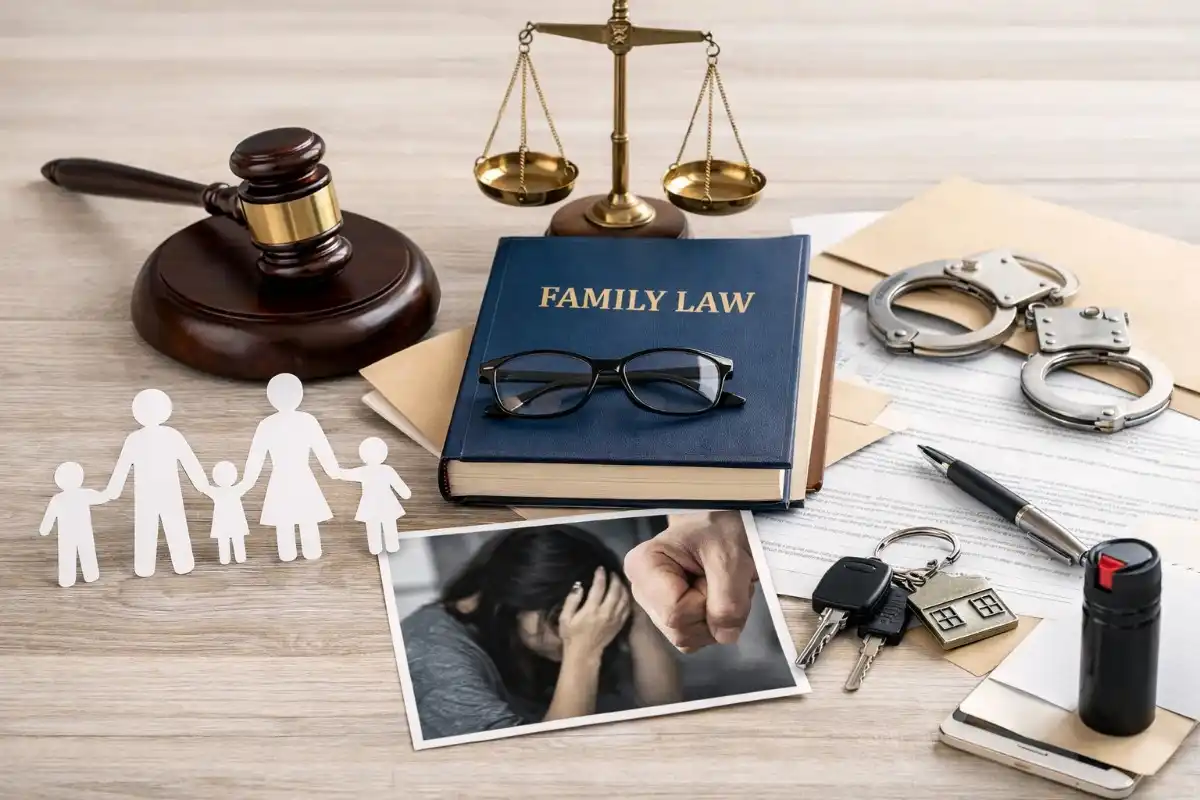
family law and domestic violence
Family Law and Domestic Violence
Now, how does family law fit in? When relationships break down, issues like divorce, kids and property come up. In Australia, family law courts prioritise safety above all. Government resources stress that separation is a high-risk time for family violence.
The Family Law Act 1975 explicitly recognizes family law and domestic violence, including physical, sexual, emotional, and psychological abuse, as key factors to consider. Restrictions on money or social contact count too. Crucially, exposing kids to violence is treated as child abuse, and courts take that very seriously.
Child Custody and Safety
If you have children, family law focuses on their best interests. This usually means children should have both parents in their lives but only when it’s safe and sensible. Shared parenting (50/50 time) is recommended only when conflict is low. If there’s ongoing violence, the courts will lean toward protecting kids and the victim-parent.
The Family Law Act mandates that the court consider the “benefit to the child” of having relationships where it is safe to do so. In plain terms: if domestic violence is happening, the court may limit the abusive parent’s access or require supervised visits. The safety of the child and non-abusive parent comes first.
Family Relationships Online (an Australian government resource) sums it up: “The Family Law Act recognises that family law and domestic violence take many forms” and ensures children’s safety is paramount.
Courts may even waive compulsory family dispute resolution (mediation) if there’s a risk of violence, so you can go straight to court for orders. This means the legal system can adapt: if you’re a victim, you don’t have to negotiate face-to-face if it’s unsafe.
Property & Separation
Domestic violence can also affect financial splits. Family law judges have the power to adjust property or spousal maintenance if one partner’s conduct (including violence) was particularly bad. It’s a bit complex, but basically, evidence of serious misconduct can influence a just division of assets.
If your ex has behaved abusively (emotionally or physically), it’s wise to mention that to your lawyer it could affect what you are entitled to.
Other Family Law Matters
Lawyers and Support
As a Brisbane professional caught in a mess like this, you probably need a guiding hand. Consider finding a family domestic violence lawyer that’s a lawyer experienced with both family law and domestic violence cases. A specialist can explain your options, whether it’s getting a DVO, changing custody orders, or filing for divorce.
Even if money’s tight, Queensland has services like Legal Aid or community legal centers for family violence matters (e.g., Women’s Legal Service QLD). The Queensland Law Society can also refer you to qualified family lawyers. Don’t go it alone; an expert can help you navigate court forms and hearings.
Narcissism and Coercive Control
A heads-up: some abusers aren’t physically violent but are emotionally ruthless. Narcissistic abuse is a covert form of domestic violence. It means your ex might gaslight you, twist facts, and isolate you without leaving bruises.
It can be confusing and exhausting. If you find yourself constantly “walking on eggshells” or being blamed for everything, that’s a red flag. As one Australian guide warns, narcissistic abuse is “insidious” and victims often take years to realize it.
In family law and domestic violence matters, this kind of abuse still matters: courts recognize it under coercive control, now even criminal in QLD. Please document any patterns (such as texts, emails, or witness notes) in case you need to explain the psychological abuse to a judge.
Prenuptial Agreements
On the prevention side, couples sometimes set up prenups (legally called Binding Financial Agreements). This is a contract before marriage outlining how assets would be divided if you split later. Australia’s Family Law Act lets people make these agreements. Think of it like laying out your own rules about money and property, in case things go sour.
A fair prenup can protect each person’s assets, especially if there’s a big income gap or inheritance involved. But this is important it won’t cover who gets the kids or anything about domestic violence itself.
Also, a prenup must be fair, and both partners need independent legal advice in line with family law and domestic violence protections to make it valid. It’s not a topic you need after a breakup, but planning ahead with a prenuptial agreement (marriage prenuptial agreement) can prevent fights over money later on.
Annulment of Marriage
You might wonder, “Can I just annul the marriage instead?” An annulment (decree of nullity) legally says no marriage ever really existed. In Australia, this is rare and only for strict reasons for example, if someone was tricked or forced to marry or was already married to someone else.
Crucially, domestic violence is not a ground for annulment. Courts won’t grant annulment just because of incompatibility, abuse, or never living together. So if there’s violence, you’ll most likely need to go through divorce proceedings instead (and deal with separation issues through that).
Divorce in Australia happens under the Family Law Act after 12 months of separation, whereas annulment is for technical invalidities of the marriage. In short: an abusive marriage doesn’t get magically wiped away with annulment.
You’d file for divorce and address everything (custody, property, DV orders) through family court.
Table: Key Family Law and Domestic Violence Tools
|
Legal Tool |
Purpose | Issued By |
Details |
|
Domestic Violence Order (DVO) |
Protects victims from ongoing abuse | QLD Magistrates Court |
Court-issued orders to stop threats/violence; breaching them is a crime. All DVOs are nationally recognized. |
|
Parenting Orders |
Child custody, visitation arrangements | The Federal Circuit and Family Court of Australia determines where children live and how parents share care. |
Sets where children live and how parents share care. Courts prioritize child safety and consider DV as a risk. |
|
Binding Financial Agreement |
Pre-determines asset division on divorce | Private agreement (enforceable under Family Law Act) |
Prenups made before marriage, requiring independent legal advice. Protects assets, but won’t cover custody or DV issues. |
| Annulment of Marriage |
Declares marriage void (rare) |
Federal Circuit and Family Court of Australia |
Available only on strict grounds (fraud, underage, bigamy, etc.). Not granted for abuse or incompatibility. |
Conclusion
Nobody plans to need these rules family breakdowns and violence are deeply personal and painful. But Australia’s legal system aims to protect you, not punish you for seeking safety.
Brisbane and Queensland have resources (from police to lawyers to counseling) to help domestic violence survivors get back on their feet. Family law provides tools like protection orders, custody orders, and fair financial settlements to ensure a safe future for you and your children.
FAQs
-
How do I apply for a Domestic Violence Order in Queensland?
Fill out the Form DV01 Application for a Protection Order online (via QLD Courts website) or at your nearest Magistrates Court. Include details of the abuse. A court hearing will be set, and if granted, the DVO protects you legally from your abuser.
-
What support is available when going to a QLD family court for DV?
Queensland courts offer a Domestic Violence Court Assistance Service and duty lawyers for DV cases. They can explain procedures and safety measures (like separate waiting areas and CCTV). Services like Legal Aid and Women’s Legal Service QLD provide free legal advice for domestic violence and family law matters
-
Should I get a lawyer for DV or family law issues?
It’s highly recommended. A family domestic violence lawyer understands both family law and protection order processes. They can help you prepare evidence, represent you in court, and advise on separation, custody, and safety. Even if you can’t afford one, community legal centres and legal aid may offer help.
-
What happens if a DV Order is made against me?
You will be listed as the respondent in the order. It means you must follow the conditions (e.g. no contact). If you think it’s unjust, you can go to court on the hearing date to tell your side. However, breaching a DV order is a criminal offence. It’s wise to get legal advice immediately if you’re named in one. The Queensland Courts site has a guide “if someone says you’ve used domestic violence
-
What is the Specialist Domestic Violence Court in QLD?
Queensland has specialist DFV courts that focus solely on family violence cases, aiming for faster, more sensitive handling. Brisbane’s first permanent one opened in Southport in 2015 (and there are others in Townsville and Beenleigh). These courts use specially trained magistrates and wrap-around support services to protect victims and hold offenders accountable.
-
How does domestic violence affect child custody decisions in Queensland?
The court’s priority is the child’s safety. If there’s evidence of violence or abuse, judges will often limit or supervise the abusive parent’s time with the children. Exposing kids to violence is treated as child abuse under family law.